
Ferry operator · Norway
Statens vegvesen
- Routes
- 45
- Terminals
- 35
- Regions
- 3
- Avg crossing
- 52 min
Public transport authorityVessels run by Fjord1, Norled, Torghatten Sør
Statens vegvesen — the Norwegian Public Roads Administration — treats ferry crossings as part of the road network. Of roughly 130 ferry connections in Norway it is directly responsible for 16, and those 16 include most of the crossings a driver actually meets on the E39, E6 and the main Rv routes.
Official site: www.vegvesen.no — always confirm the current timetable there before travelling.
Timetables
Routes operated by Statens vegvesen
Showing the 24 most-searched of the 45 routes Statens vegvesen runs.
| Route | Crossing | Sailings/day | Region |
|---|---|---|---|
| Arsvågen → Mortavika | 24 min | 113 | — |
| Sandvikvåg → Halhjem | 45 min | 85 | Vestland |
| Horten → Moss | 35 min | 107 | — |
| Lødingen → Bognes | 1 hr | 23 | Nordland |
| Bodø → Moskenes | 3h 15m | 37 | Nordland |
| Skarberget → Bognes | 25 min | 27 | Nordland |
| Hjelmeland → Nesvik | 12 min | 45 | — |
| Dragsvik → Hella | 10 min | 47 | Vestland |
| Oppedal → Lavik | 20 min | 97 | Vestland |
| Anda → Lote | 11 min | 57 | Vestland |
| Mannheller → Fodnes | 15 min | 58 | Vestland |
| Mortavika → Arsvågen | 24 min | 116 | — |
| Bognes → Lødingen | 1 hr | 24 | Nordland |
| Lavik → Oppedal | 20 min | 98 | Vestland |
| Moskenes → Værøy | 1h 15m | 13 | Nordland |
| Skipavik → Hjelmeland | 17 min | 13 | — |
| Moss → Horten | 35 min | 104 | — |
| Værøy → Moskenes | 1h 15m | 10 | Nordland |
| Volda → Folkestad | 13 min | 47 | Møre og Romsdal |
| Drag → Kjøpsvik | 45 min | 9 | Nordland |
| Halhjem → Sandvikvåg | 45 min | 83 | Vestland |
| Bognes → Skarberget | 25 min | 27 | Nordland |
| Festøya → Solavågen | 20 min | 66 | Møre og Romsdal |
| Lote → Anda | 11 min | 55 | Vestland |
Sixteen crossings, and they are the ones on the through-routes
Norway has about 130 ferry connections. County councils and municipalities run most of them; Statens vegvesen has direct responsibility for the 16 that carry the national road network across water. It does not own vessels — it buys ferry services from the companies that own and operate them, and writes safety, value-creation and low-emission requirements into those contracts.
The full list, with the road each one carries:
- E39: Arsvågen–Mortavika · Halhjem–Sandvikvåg · Lavik–Oppedal · Lote–Anda · Solavågen–Festøya · Molde–Vestnes · Halsa–Kanestraum
- E6: Bognes–Skarberget
- Rv 5: Mannheller–Fodnes · Rv 13: Hjelmeland–Nesvik–Skipavik and Vangsnes–Hella–Dragsvik · Rv 19: Horten–Moss
- Rv 80: Bodø–Værøy–Røst–Moskenes · Rv 85: Bognes–Lødingen · Rv 651: Volda–Folkestad · Rv 827: Drag–Kjøpsvik
This is worth checking against whichever county transport site you are reading. A county authority will often publish timetables for a crossing inside its borders without administering it — FRAM lists the four Møre og Romsdal state crossings, and Nordland and Skyss both publish explicit notes about which connections are not theirs.
Who sets the fare depends on who owns the crossing
Statens vegvesen administers the AutoPASS tariff regulation for ferry fares on behalf of the Ministry of Transport, which is the fare authority for the state crossings. County ferry connections have their own fare authority — the county council — but in practice most counties have chosen to adopt the same AutoPASS regulation. That is why the payment experience is so consistent across Norway even though the responsibility is split.
Statens vegvesen also publishes a market overview (markedsoversikt) listing which company operates every ferry connection in the country and for what contract period, compiled from the contracting authorities themselves.
The world's first electric ferry ran on one of these routes
Statens vegvesen started this in 2014 with MF Ampere on Lavik–Oppedal — the world's first electric ferry. The push has since gone further than batteries. In 2017 it tendered a development contract for a hydrogen-electric ferry on Hjelmeland–Nesvik–Skipavik, explicitly not because the crossing was too demanding for batteries but because the technology and the market needed building. In 2021 came the largest hydrogen contract so far, on Bodø–Værøy–Røst–Moskenes, where two new ferries are to run mainly on hydrogen.
The 16 connections are served by 44 main ferries. As of the end of 2024, over 60 percent of them were green — 27 electric and one hydrogen-electric. Close to 30 percent, 13 ferries, run on liquefied natural gas, which is cleaner than ordinary marine gas oil but which Statens vegvesen no longer classifies as a green fuel.
The network
Where Statens vegvesen sails
- Arsvågen
- Mortavika
- Sandvikvåg
- Halhjem
- Horten
- Moss
- Lødingen
- Bognes
- Bodø
- Moskenes
- Skarberget
- Hjelmeland
- Nesvik
- Dragsvik
- Hella
- Oppedal
- Lavik
- Anda
- Lote
- Mannheller
- Fodnes
- Værøy
- Skipavik
- Volda
- Folkestad
- Drag
- Kjøpsvik
- Festøya
- Solavågen
Explore
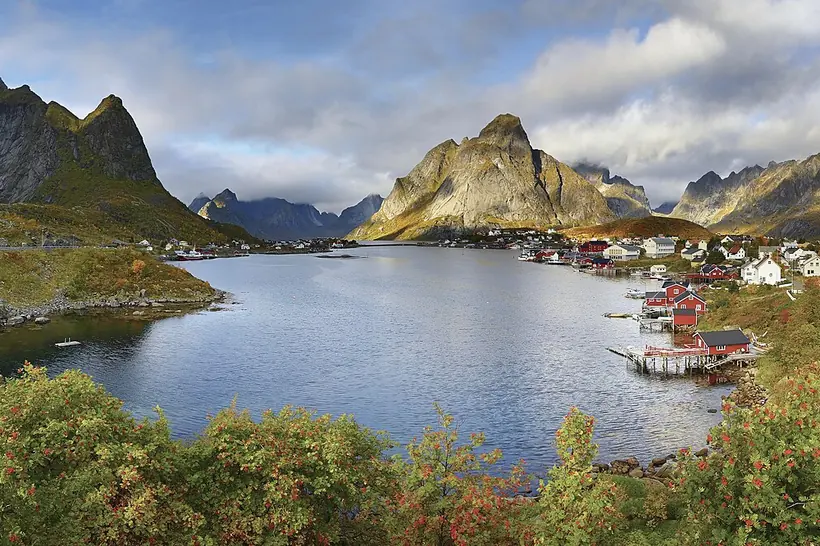
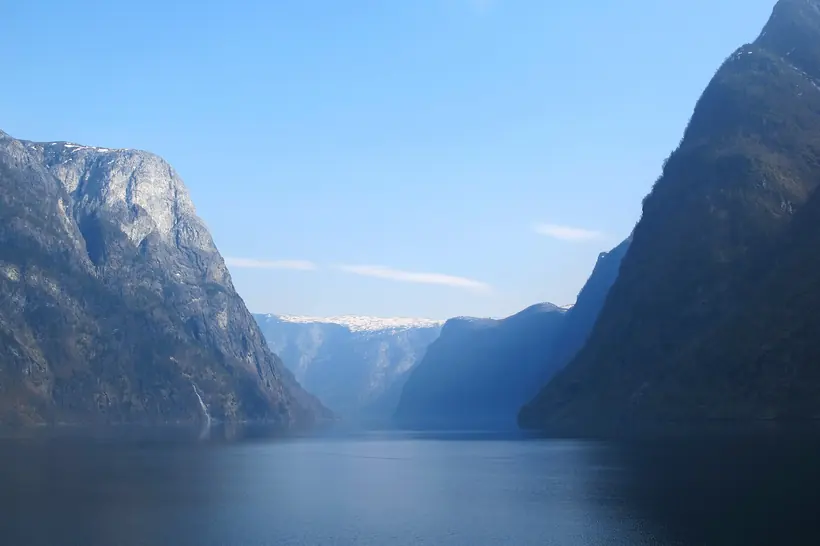
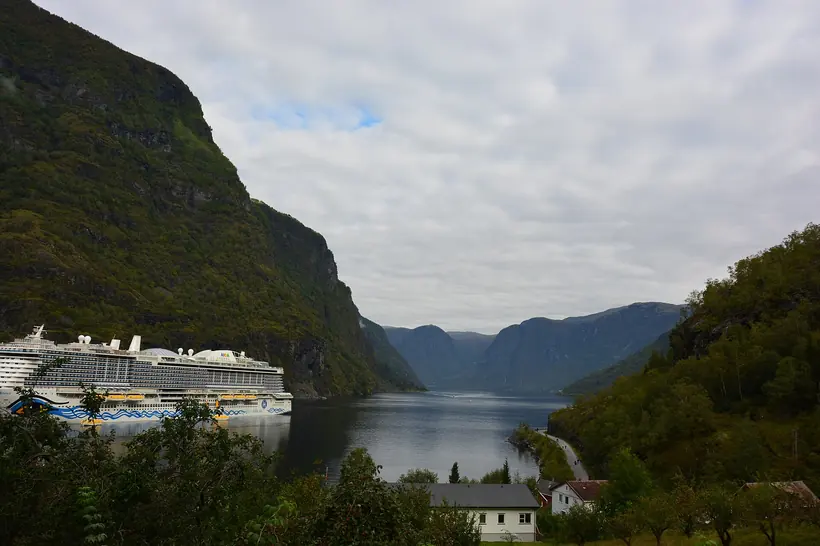
Regions Statens vegvesen serves
Paying aboard
Fares with Statens vegvesen
Driving with Statens vegvesen? Its road-ferry fares use AutoPASS for Ferries — vehicles are billed automatically by length and foot passengers usually travel free. There is normally no ticket to buy in advance.
Good to know
Frequently asked questions
Which ferries does Statens vegvesen run?
Sixteen connections carrying the national road network: Arsvågen–Mortavika, Halhjem–Sandvikvåg, Lavik–Oppedal, Lote–Anda, Solavågen–Festøya, Molde–Vestnes and Halsa–Kanestraum on the E39; Bognes–Skarberget on the E6; Mannheller–Fodnes, Hjelmeland–Nesvik–Skipavik, Vangsnes–Hella–Dragsvik, Horten–Moss, Bodø–Værøy–Røst–Moskenes, Bognes–Lødingen, Volda–Folkestad and Drag–Kjøpsvik on Rv routes.
Does Statens vegvesen own the ferries?
No. It buys ferry services from private companies that own and operate the vessels, on contracts that carry safety and emission requirements. Fjord1, Norled and Torghatten Sør are among the operators running state crossings.
Why does my county transport site show a ferry that Statens vegvesen runs?
Because county authorities publish timetables for crossings inside their area whether or not they administer them. FRAM lists the four state crossings in Møre og Romsdal, and both Nordland and Skyss publish notes about which connections are not theirs. The timetable is still accurate; the responsibility simply sits elsewhere.
Who decides ferry fares in Norway?
For the 16 state crossings, the Ministry of Transport is the fare authority and Statens vegvesen administers the AutoPASS tariff regulation on its behalf. County ferry connections have their county council as fare authority, but most counties have adopted the same AutoPASS regulation, which is why paying feels the same nationwide.
How many Norwegian ferries are electric?
On the state network, 27 of the 44 main ferries were electric at the end of 2024, plus one hydrogen-electric — over 60 percent green. A further 13 run on LNG, which is cleaner than marine gas oil but is no longer counted as a green fuel.
Where did the world's first electric ferry operate?
On Lavik–Oppedal, across the Sognefjord on the E39. MF Ampere entered service there in 2014 under a Statens vegvesen development contract, and battery ferries spread across Norway from that starting point.
Are there hydrogen ferries in Norway?
Yes. A development contract tendered in 2017 put a hydrogen-electric ferry on Hjelmeland–Nesvik–Skipavik, and a 2021 contract — the largest hydrogen contract to date — covers two new ferries for Bodø–Værøy–Røst–Moskenes running mainly on hydrogen.