The General Rule: Most Road Ferries Are Not Bookable
For the vast majority of car ferry crossings that form part of the road network in Norway and Sweden, you cannot reserve a space. The system is designed for simplicity: you drive to the ferry quay, join the appropriate lane, and wait to board on a first-come, first-served basis. This applies to hundreds of local routes that function as floating bridges, connecting fjord communities and islands to the mainland.
In Sweden, the national road administration, Trafikverket, operates a network of around 40 distinctive yellow ferries under its Farjerederiet division. These are considered an extension of the public road system. As such, nearly all of them are free of charge and operate without any booking facility. You simply join the queue and drive on when directed.
Similarly, most of Norway’s domestic car ferries, run by operators like Fjord1 and Norled, do not offer reservations for their standard routes. If a ferry is full when you arrive, you just wait for the next one. On busy connections, the subsequent departure is often only 20 to 40 minutes later, so any delay is usually short.
How Payment Works on Non-Bookable Ferries
The absence of ticket booths at many Norwegian ferry quays can be confusing for visitors. Payment is increasingly automated through a system called AutoPASS ferje, which uses automatic number-plate recognition (ANPR) cameras. If you are driving your own car registered with a payment provider like FerryPay, the fare is charged automatically. For drivers in rental cars, the hire company is billed and will typically pass the cost on to you, often with an administration fee.
On routes without this technology, or on a few specific Swedish crossings like Visingsoleden and Ekeroleden, you will pay at a kiosk on the quay or to a crew member onboard, usually by card. A significant number of Norwegian island connections that provide the only road access are entirely free of charge.
Exceptions: When You Can and Should Book a Ferry
While queuing is the norm, a few specific categories of ferry service in Norway and Sweden either require or strongly recommend advance booking, particularly for vehicles during the summer high season.
1. International Crossings
All international ferry routes, such as those connecting Norway and Sweden with Denmark or Germany, must be booked in advance. These services, operated by companies like Color Line and Fjord Line, function more like airlines. You need to provide passenger names and vehicle details when you book your ticket online. This includes the relatively short but popular crossing between Sandefjord in Norway and Stromstad in Sweden. For these international routes, operators require you to arrive well before departure; Color Line, for example, asks vehicle passengers to check in up to about 120 minutes beforehand.
2. High-Demand Tourist Routes in Norway
Certain scenic car ferry routes that are extremely popular with tourists have limited capacity and can be pre-booked. It is highly advisable to do so for a vehicle between May and September.
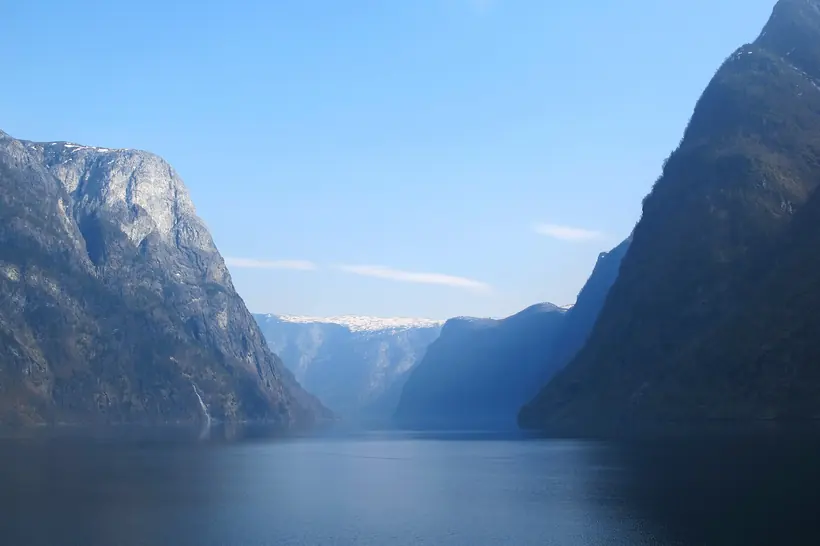
- Geiranger to Hellesylt: This famous fjord sightseeing route has limited space for cars. To guarantee a spot during summer, booking your vehicle in advance is recommended. Foot passengers, however, can usually just turn up shortly before departure.
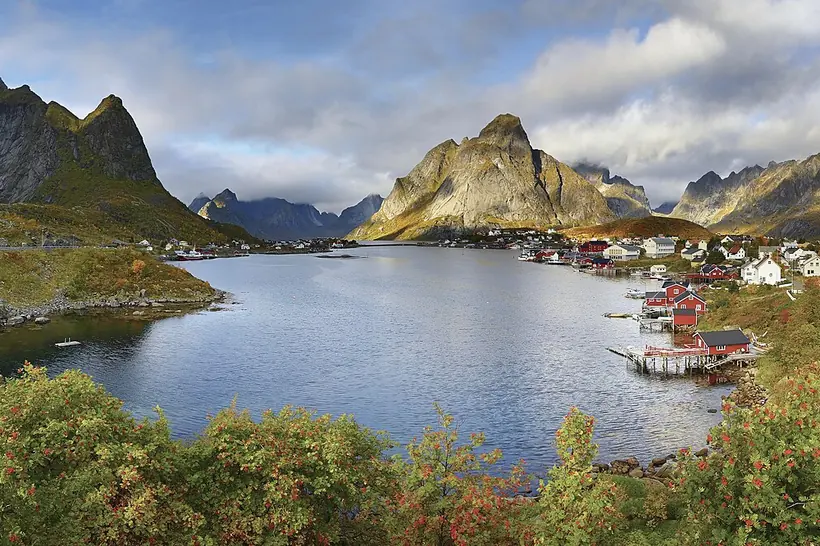
- Lofoten Islands (Bodø to Moskenes): This is one of the few Norwegian road ferries where vehicle reservation is available and strongly advised in the high season (May-September). Run by Torghatten Nord, this crossing is a critical link to the western Lofoten islands. A reservation fee is charged on top of the fare, with a higher fee for longer vehicles.
3. Express Passenger Boats (Hurtigbåt)
In Norway, high-speed passenger-only catamarans (known as hurtigbåt) often serve routes where cars cannot go. Operators like Norled sell tickets online for these services, including popular tourist journeys like the Bergen-Sogn-Flam route. If you are travelling on foot, it is wise to book these in advance.
The Lofoten Ferry: A Special Case
The Bodø-Moskenes ferry booking system has a feature that is useful for tourists to understand. The operator, Torghatten Nord, only makes a portion of the ferry's vehicle deck available for pre-booking. This means that even if the route appears 'sold out' online, there will always be some space held back for drivers who turn up on the day without a reservation.
If you do not have a booking, your chances of getting on depend on arriving very early to be at the front of the unreserved queue. If you do have a reservation, you must be in the correct queueing lane well before the deadline, which is typically about 45 minutes before departure, otherwise you risk losing your reserved spot.
Note that for security reasons, all passengers on the Bodø-Værøy-Røst-Moskenes route must register their full name, nationality, and date of birth before they can board.
Advice for Foot Passengers
If you are travelling without a vehicle, the situation is much simpler. On the vast majority of Norwegian drive-on car ferries, foot passengers travel for free and capacity is rarely an issue. You can simply walk on board shortly before the ferry leaves. For international lines and bookable tourist routes, you will need a ticket, but you are far less likely to find the ferry full than those travelling with a car.
Summer Travel and Queues
In the peak months of July and August, queues for popular unreserved ferries can become long, especially on key tourist arteries and island connections. While the next ferry might not be far behind, it is always wise to arrive at the quay earlier than you would off-season to secure a place on your desired departure.
The far north inverts the usual advice
Everywhere else in this guide, booking is optional and queueing is the norm. Cross into Troms or Finnmark and that stops being true — in opposite ways.
Troms added guarantees: reserve a specific express boat departure and your place is held. Finnmark went further and made the stop itself conditional. There, a reservation is what persuades the vessel to call at all; without one it stays offshore, and no amount of standing on the pier changes that. The paradox is that a Finnmark ticket still does not promise you a seat — a full boat can turn you away, refunded.
So an itinerary spanning both counties needs two different habits within a day's drive of each other. Assume neither behaves like the rest of Norway.