
Ferry operator · Norway
Vestlandske
- Routes
- 2
- Terminals
- 2
- Regions
- 1
- Avg crossing
- 45 min
Ship operator
Vestlandske runs the fjord cruise between Geiranger and Hellesylt, through UNESCO-listed Geirangerfjord. The company is converting its vessels and states that its ferries go zero-emission from 2026.
Official site: www.vestlandske.com — always confirm the current timetable there before travelling.
Timetables
Routes operated by Vestlandske
Showing the 1 most-searched of the 2 routes Vestlandske runs.
| Route | Crossing | Sailings/day | Region |
|---|---|---|---|
| Hellesylt → Geiranger | 45 min | 34 | Vestland |
A World Heritage crossing, seen from deck
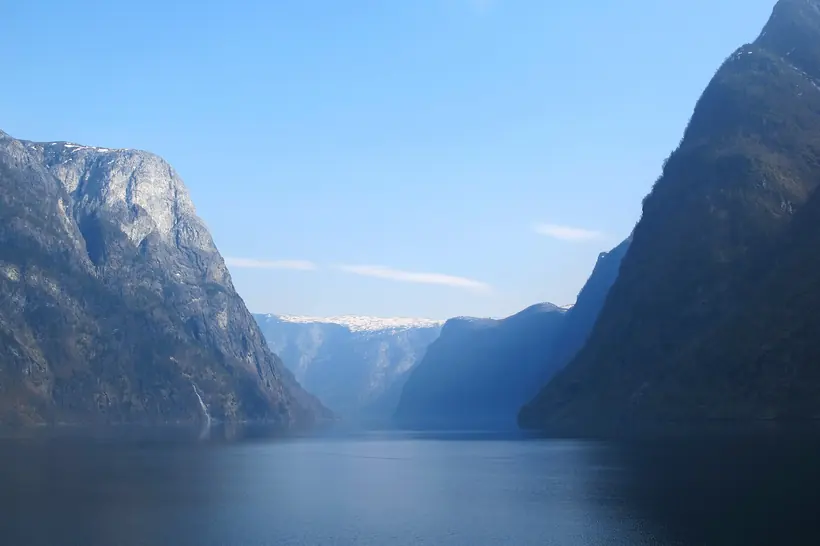
The Geiranger–Hellesylt route is not a car ferry with a view; it is sold as a fjord cruise, and the fjord itself is the reason to be aboard. Vestlandske's framing is World Heritage from the deck — the Geirangerfjord's waterfalls and rock walls passing directly outside the windows.
The company points to experienced captains and crew with long service on this fjord, which matters more here than on a short crossing: the route runs the length of a narrow, steep-sided fjord where conditions and traffic both need local knowledge.
Zero emission from 2026
Vestlandske states that its zero-emission ferries arrive from 2026, cutting emissions and protecting the fjord for the future, and that it is rebuilding its existing vessels for zero-emission operation rather than only ordering new ones.
That direction is not voluntary in spirit — the Geirangerfjord is a World Heritage site with tightening rules on ship emissions — but converting an operating fleet rather than replacing it is a different undertaking from buying new hulls.
Winter is becoming part of the season
Geiranger has historically been a summer destination, and Vestlandske is extending into the quiet half of the year. It describes the winter fjord as the counterpart to the summer crowds: snow-covered peaks reflected in dark water, and the waterfalls frozen into ice. Winter timetables are published ahead of each season.
Booking and payment are completed through Norway's Best rather than on Vestlandske's own site, with the booking flow offered in Norwegian, English, German, French and Spanish.
Two operators, two crossing times
How long the crossing takes depends on which sailing you catch, and the published timetable makes the split visible. Vestlandske's own daily sailings run about 45 minutes — the 08:00 arrives at 08:45. The weekend sailings operated by FRAM take around 65 minutes. Vestlandske's own travel page describes the experience as about an hour and a quarter, which fits the slower, sightseeing-paced end of that range.
If you are bringing a vehicle the operator asks you to be at the quay no later than 30 minutes before departure — worth building into a driving day, because this is a scheduled sailing rather than a shuttle.
Tickets are sold exclusively through Norway's Best. Booking online is recommended to guarantee a place, though tickets are also available at the quay through the same system.
What you pass, and what is on board
The route runs through the heart of the World Heritage area and passes the landmarks the fjord is known for: De Syv Søstre (the Seven Sisters), Friaren (the Suitor) and Brudesløret (the Bridal Veil). A kiosk stays open for the whole crossing serving hot food, coffee, ice cream and snacks, with a large saloon inside and deck space outside.
Dogs are welcome, on a lead and kept to the designated areas.
Three vessels, one of them a protected monument
- MF Hjørungavåg — the flagship, built at Gurskebotn Verft in 1990. 85 by 15 metres, 600 passengers and 120 car units.
- MF Jotunheim — currently sailing Hellesylt–Geiranger. Built in 1978 as Solbakk, 57 by 11 metres, 300 passengers and 35 car units.
- MF Skånevik — built at Ulstein Mekaniske Verksted in 1967 and now a protected historic vessel, officially recognised as a national cultural monument. That status requires it to be preserved as close to its original condition as possible. It dates from the era before bridges and tunnels tied the west coast together, when ferries like it were the only link between towns and villages.
The network
Where Vestlandske sails
Explore
Regions Vestlandske serves
Paying aboard
Fares with Vestlandske
Driving with Vestlandske? Its road-ferry fares use AutoPASS for Ferries — vehicles are billed automatically by length and foot passengers usually travel free. There is normally no ticket to buy in advance.
Good to know
Frequently asked questions
Who runs the Geiranger–Hellesylt fjord cruise?
Vestlandske. Booking and payment are completed through Norway's Best rather than on Vestlandske's own website.
When do the zero-emission ferries start?
Vestlandske states its zero-emission ferries arrive from 2026, and that it is rebuilding existing vessels for zero-emission operation rather than solely ordering new ones.
Does the fjord cruise run in winter?
Yes — Vestlandske is extending into the winter season and publishes winter timetables ahead of each season. The attraction is the opposite of summer: snow-covered peaks reflected in dark water and frozen waterfalls.
What languages can I book in?
Norwegian, English, German, French and Spanish, through the Norway's Best booking flow.
Is the Geirangerfjord protected?
Yes, it is a UNESCO World Heritage site, which is part of the reason emission requirements on vessels operating there are tightening.